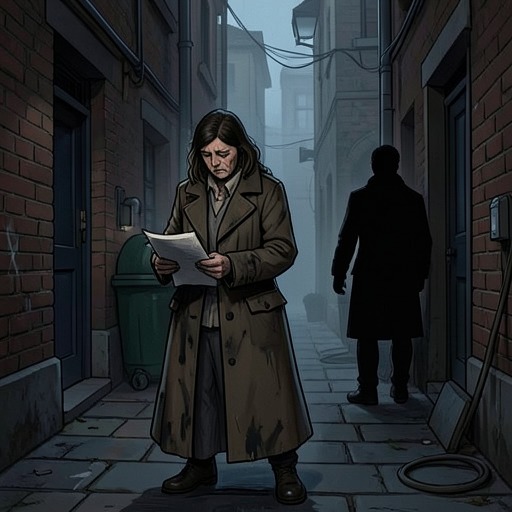
Revisional-soul tax liability
Dead SoulsRevisional-soul tax liability made a person’s official status persist beyond death: landowners owed tax on every serf recorded in the latest revision list until a new census changed the register. In Dead Souls, this mismatch between living people and administrative records becomes both a concrete burden on proprietors and the opening through which Paul Ivanovitch Chichikov devises his scheme to acquire fictitious assets.
How the Liability Worked
Under the serf system described in the book, periodic censuses might be separated by ten or twenty years. The poll tax continued to fall on each registered “soul” during that interval, including one who had died since the count. The obligation attached to the census record, not to the person’s continuing life; the resulting costs therefore rested with the landowner until the next revision.
The same register could also carry financial value. A proprietor could borrow against registered serfs, dead as well as living, so an outdated entry was not merely a tax problem but a potentially usable asset. The rule thus joined taxation, property, and credit through a record that could remain legally consequential after the person it described had disappeared.
Chichikov’s Scheme
Chichikov recognizes that the tax burden gives sellers a reason to part with dead serfs: transferring the names could relieve landowners of payments on people who no longer lived. He proposes to collect those names at reduced prices, present the resulting list as a body of serfs, and mortgage it to raise money for an estate and living serfs. The scheme depends on the discrepancy between administrative registration and actual population, while disguising the transaction as a transfer of peasants to land in Kherson.
The idea emerges from the routine handling of a failed estate’s affairs. Chichikov is acting as an attorney in placing several hundred peasants belonging to a ruined property in the hands of the Public Trustee. When a secretary asks whether the dead people appear on the revision lists, the answer is yes; the secretary treats the matter as unremarkable, reasoning that one soul will eventually be replaced by another. Chichikov instead sees a profit opportunity in acquiring registered names before the next revision.
His later dealings show how the rule works in practice. He asks Manilov to settle on a price for the dead souls, but Manilov offers them unconditionally and agrees to bear the expenses of sale. With Sobakevitch, Chichikov inspects a carefully prepared list recording each serf’s trade, age, and pedigree, along with marginal notes on conduct and sobriety. The detailed inventory gives the transaction the appearance of orderly property dealing even though its subjects are dead.
Registration and Legal Appearance
To make the purchased names useful, Chichikov must have the transfers formally registered. At the municipal offices he asks where serf-indenture business is conducted, then presents his purchase list and says that he has bought peasants from landowners in the district for transfer. Some vendors are present; for the others, he says, he has powers of attorney. The official procedure therefore provides the scheme with a documentary form that can make dead people appear to have changed owners rather than ceased to exist.
Chichikov’s own account of the plan exposes its tension with the law. He proposes to claim that the peasants are being transferred elsewhere, although he knows that buying or mortgaging landless peasants is illegal. He imagines a settlement in Kherson, where land is said to be available cheaply on the condition that it be colonized, and even invents a village name for the supposed destination. The formal transfer is meant to protect the transaction’s appearance, not to bring the dead back to life.
The Burden Beyond the Scheme
The liability remains a real cost for struggling proprietors, not merely a device in Chichikov’s fraud. Khlobuev describes an estate in terrible condition: of a hundred souls recorded at the last revision, only fifty survive, with some of those having absconded. Because legal proceedings against the fugitives could leave the property in the hands of the authorities, he treats them as dead for purposes of the estate’s practical losses and asks thirty-five thousand roubles for the property. The census figure and the surviving population diverge sharply, while illness and flight deepen the owner’s economic distress.
The arrangement also gives Chichikov’s proposal a charitable-sounding disguise. In his approach to Lienitsin, he presents the purchase of dead and absconded souls as relief for impoverished landowners who would otherwise continue paying tax on names still on the rolls. Yet he also insists on secrecy and proposes a formal agreement treating the souls as alive. The language of assistance does not remove the underlying fraud; it shows how the tax burden supplies a plausible pretext for a transaction whose value depends on keeping the records’ false appearance intact.
Narrative and Institutional Significance
The tax rule supplies the novel with its central mechanism: an administrative category survives its human referent, and Chichikov tries to convert that survival into money. The scheme is possible because the revision list, the landowner’s tax obligation, and the possibility of borrowing against registered serfs reinforce one another. What looks like a dry matter of census timing becomes a chain linking mortality, debt, property, and state paperwork.
The later investigation of Chichikov brings the transaction back into view alongside allegations concerning a disputed will, concealed funds, and his earlier customs dealings. Authorities obtain information about his purchase of dead souls, turning his apparently private device into part of a broader inquiry into his past. The liability that first seemed to let him exploit a gap in official knowledge ultimately helps expose the risks of a system in which documentary status can be manipulated, yet remains consequential enough to draw official scrutiny.